Most people, in many countries, are familiar with John Lennon’s song “Imagine”. 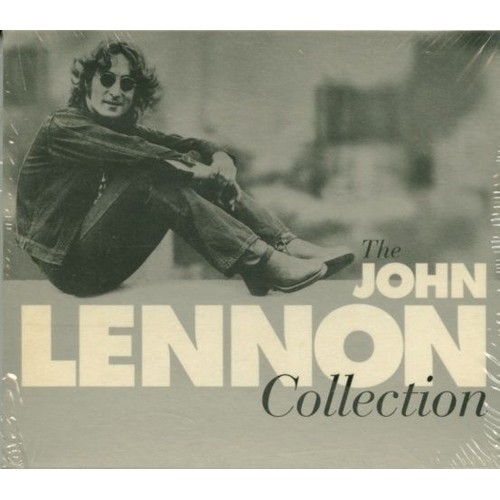
Something captivated the listener’s imagination. Imagination can bring us to where we might be from where we are. Lennon was persuading us to imagine collectively, even beyond the nation state. A collective imagination is not a discard of nation states, but a framework for thinking about an international community, rather than warring nation states.
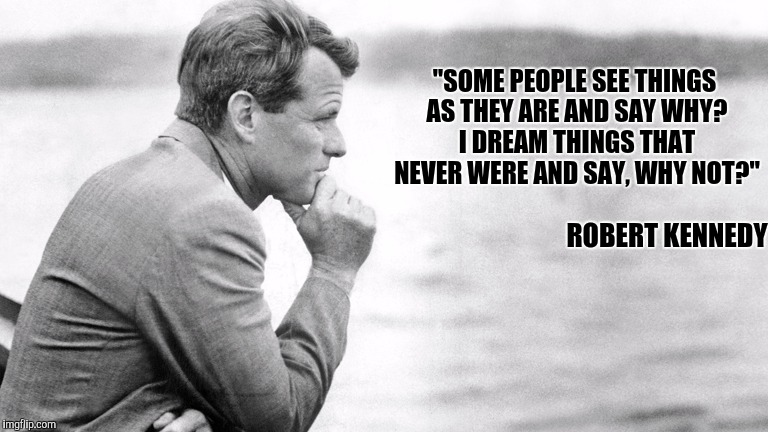
Of course, becoming an international community is not easy to accomplish, but without thinking about it, how do we achieve it? Imagination is useful. As Robert Kennedy Sr. said “Some people see things as they are and say why? I dream things that never were and say why not?”
It does not matter that humanity has not yet matured into an international community. As the creator of Star Trek, Gene Roddenberry said “Humanity is in its adolescence.” With imagination, humanity can grow into a young adult.
Steve Jobs, the founder of Apple, once said that he “tried to do for computers what Eichler did for homes.” This was a reference to Joe Eichler, a home developer throughout the San Francisco Bay Area and beyond. My father, John Boyd, was a senior architect for Joe Eichler. They both admired the architect Frank Lloyd Wright and took inspiration from him to imagine subdivisions of homes that worked for common people and families.
I grew up in one these Eichler homes in Palo Alto, California.

So, if we take what Eichler did for homes and Jobs did for computers, create things that worked for everyone, how do we apply that to our international community so that rights are created that work for everyone?
When Eleanor Roosevelt was asked about what qualities were needed for the creation of an International Bill of Rights, she said “imagination and courage.”
Following her guidance, Unite asks people to use their imagination to join on the Unite globe to show support for an International Bill of Rights, and have the courage to share their thoughts on an International Bill of Rights, not to agree on every right, but perhaps to agree on some of them.
Too often the discussion about human rights is what rights are we born with? It becomes an endless circle of discussion and those who resist enforceable rights goad others into this discussion. What rights are inherent in being human? The answer is none. We are not born with rights. Yuval Noah Harari, the author of “Sapiens” and recently “Nexus” is correct that human rights are just a story.

We are born into societies where they either tell the story of rights, or they don’t. And they either have independent judges to enforce the rights in this story, or they don’t. It’s better if they do.
For many within the human rights community, equating rights with story is blaspheme. They like the story of rights being inherent in human beings so much that they like to assume it as a given. So, if we just repeat the story, or write out the list of rights enough times, they will develop and become enforceable: it has not worked.
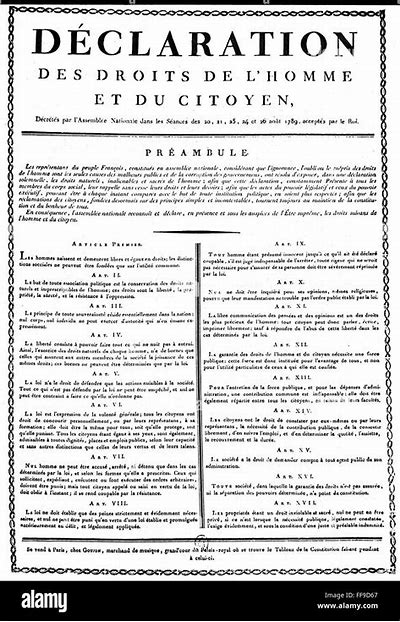
For the most part, the original post WWII goal of an International Bill of Rights that would be enforceable in the courts of all countries has failed.
The UDHR was an a tremendous first step, but it was an unenforceable document when it was created, and it has remained so.
Please understand that I like the story of the UDHR, and the story of rights for all. I’ve spent one half of my legal career, most of it pro-bono, doing what I can to further the enforcement of rights in the UDHR. The basic principles in the UDHR have helped create judicially enforceable rights in some nations.
I’m glad to have children in all countries taught the story that there are rights we all have, and share that story, but it cannot stop there — we need to enhance the story into what Malcolm Gladwell, in his book “The Revenge of the Tipping Point” calls the “overstory.”
What humanity needs is a sweeping overstory and an International Bill of Rights (IBOR) provides one. The key to the Unite IBOR overstory is that rights are enforceable in courts. From its logo, to its International Bill of Rights document, and a map showing locations for an international court system, Unite provides this overstory.
The mistake since the UDHR was created in 1948 is that our judicial enforcement institutions have lagged too far behind our proclamations about rights. It is important to recognize and celebrate the many proclamations of rights over the years, they have created important norms, but we should equally and forcefully move to the next step, judicial enforcement of those norms. This is the story we need to tell; it is the story of Unite for Rights.
The stories we tell create the lives that we lead.
To secure rights for all, we need not prove that we are born with them. All we need to do is muster enough people to demand rights, and then use our ability to read and write to put those rights into a written International Bill of Rights. With an International Bill of Rights in hand, we make it a quid pro quo for those who govern – then create courts with independent Judges to ensure that leaders keep their part of the deal.
There will always be authoritarians who will try and seize power for themselves. This is foreseeable. Given this truth, it is essential for humanity to develop what Harari calls a “self-correcting mechanism”: An International Bill of Rights is a self-correcting mechanism for our social contract, our agreement between those who govern, and those who are governed. At the moment those in power try to abuse the limited power we give them, cases can be brought in court to stop them. As we transition to an international community, we can create judicial institutions to restrain authoritarians so that the rest of us do not suffer their abuse.
The greatest control athoritarians exert over us is not that they punish us for telling a story about enforceable rights, it is when those in power convince us that it is futile to even think we can assert rights against them, so we do nothing to create an International Bill of Rights.
Given humanity as it is, an International Bill of Rights, created by people of free will, is the best we can be. Now it’s time to use our imagination and courage to change the story, and create an International Bill of Rights that, like an Eichler, works for all.


Leave a Reply